
"drought-tolerant crops"
10550 article(s) found
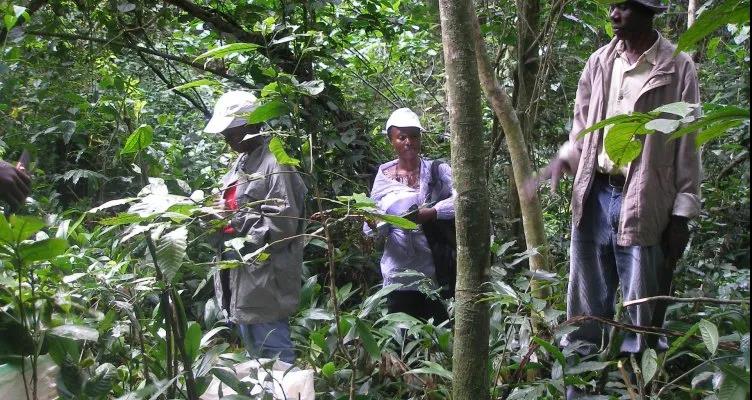
Drought-resistant wild Robsta has been found in Uganda, which is of great help to the cultivation of drought-tolerant coffee varieties.
For more information on coffee beans, please follow the Coffee Workshop (Wechat official account cafe_style) recently coffee variety researchers in Uganda, the Netherlands and France have discovered a previously unknown wild robusta coffee population with potential drought resistance in Uganda's endangered forests. This discovery will help to cultivate drought-resistant coffee varieties and coffee industry in the future.

Introduction of coffee beans from Arusha Coffee Farm in Tanzania
Corn: mainly cultivated by small farmers, the main planting areas include Arusha, Dorma, Iringa, Mbeya, Ruqua and Rovuma. Production rarely exceeds 3 million tons. Unfavorable climatic conditions are said to be the reason for the low yield. Rice: mainly grown by small farmers, there are also several large-scale rice farms of the National Agriculture and Food Corporation (NAFCO). Big

Introduction to the characteristics of coffee flavor and taste of Arusha Coffee Manor in Tanzania with elegant acidity
. Since 1986, it has accepted the adjustment plan of the International Monetary Fund (IMF) and the World Bank, and implemented the three-year economic recovery plan for three consecutive times. The Tanzanian government takes poverty alleviation as the focus of government work, implements the economic reform policy centered on economic restructuring, promotes the process of economic liberalization and privatization of state-owned enterprises, and adheres to moderately tight fiscal and monetary policies to ensure that the national economy

Some coffee growing areas will not be able to farm by 2050?
Coffee and tea growers in Kenya now have to face the problems of global warming, and economists say the outlook for cash crops is grim. According to Kenya's Business Daily on the 17th, scientists have warned that climate change will be permanent, so growers may be forced to completely change their farming methods, including changes in the types of crops they grow. Expert prediction
Coffee and tea growers in Kenya are severely affected by climate change
Coffee and tea growers in Kenya now have to face the problems of global warming, and economists say the outlook for cash crops is grim. According to Kenya's Business Daily on the 17th, scientists have warned that climate change will be permanent, so growers may be forced to completely change their farming methods, including changes in the types of crops they grow. Expert prediction
Some coffee-growing areas in Kenya will not be able to cultivate by 2050
Scientists warn that climate change will be permanent, so growers may be forced to revolutionize their farming methods, including the types of crops they grow, Kenya's Business Daily reported. Experts predict that some tea and coffee growing areas will not be able to cultivate by 2050. Experts say the dry climate will make it harder to grow in central Kenya.

Ethiopia, a big producer of coffee beans, has reduced production. What will happen in the future?
A lot of the coffee we drink today is made from Arabica beans. Ethiopia is not only an important producer of Arabica coffee beans, but also the largest producer of Arabica coffee beans in Africa, with 15 million people living on it and an important economic pillar. But climate change, such as rising temperatures and reduced rainfall, is affecting the coffee bean industry step by step. NPR reports that

Changes in Ethiopian coffee producing areas how much Ethiopian coffee beans cost half a pound
Professional coffee knowledge exchange more information about coffee beans Please follow the coffee workshop (Wechat official account cafe_style) now a lot of the coffee we drink is made from Arabica coffee beans. Ethiopia is not only an important producing area of Arabica coffee beans, but also the largest producer of Arabica coffee beans in Africa. 15 million people live on it, so it is an important economic branch.

There are several kinds of coffee beans. Do you understand the characteristics of Arabica coffee beans?
Professional coffee knowledge exchange more coffee bean information please follow the coffee workshop (Wechat official account cafe_style) front street-three major coffee bean varieties introduction Arabica originated in Ethiopia, scientific name Coffea?arabica?Linnaeus. Arabica beans are also called small seeds because of their small fruits and kernels. It is a self-pollinated crop with relatively cold and drought tolerance.

Flavor description of Coffee Sidamo and Yega Chuefei Grinding Calibration step
Description of the Flavor of Coffee Sidamo and Yegashefi Coffee hand-flushing steps in Ethiopian Japanese beans, some fruits are usually found, such as small stones or twigs, so when grinding, special attention should be paid to the balanced flavor of Sidamo, its sweetness is higher, and its mellow thickness is higher than that of Yegashefi, especially in the process of sun-drying pulp fermentation.

Tanzania coffee boutique coffee beans introduce flavor and taste manors in producing areas
Wheat: the national average annual output of wheat is 70, 000 tons, and the largest wheat production unit is the HANNANG wheat complex, which is composed of several farms with a total planting area of 4000 hectares. These farms are located in the Hannang district of Arusha and are all autonomous subsidiaries of NAFCO. In the 1970s, NAFCO developed and operated these with the help of the Canadian International Development Agency (CIDA).

Introduction to the characteristics of Tanzania Kilimanjaro Coffee Flavor Manor treated with Water washing
Rice: mainly grown by small farmers, there are also several large-scale rice farms of the National Agriculture and Food Corporation (NAFCO). Large-scale cultivation depends mostly on modern irrigation facilities, while small-scale cultivation depends entirely on natural rainfall or traditional irrigation. The national annual output of rice is 60-700000 tons. The main planting areas are Shinyanga, Mwanza, Morogoro, Mbeya and Tabora.
Growth habits and planting techniques of Coffee trees
First, the growth habit of coffee is warm, drought-tolerant, not cold-resistant, afraid of freezing, seedlings and adults are easy to be defoliated to death by frost, and the seeds can not mature. Coffee is not strict on the land, idle land can also be planted, but with good drainage, deep soil, loose and fertile sandy soil is appropriate. Second, seed selection of planting techniques: before sowing, the germination rate of seeds should be tested. Specific method: the full grain

Introduction of Coffee planting techniques and growth habits introduction of planting methods of Coffee trees
Field management of loosening soil and weeding: when the seedling height is 3cm to 6cm, the weak or overdense seedlings are pulled out; when the seedling height is 10cm and 13cm, the plant distance is about 30cm. Soil loosening and weeding were carried out at the same time between seedlings and fixed seedlings to keep the soil loose. Coffee beans are more drought-tolerant, and the soil can grow normally when the soil moisture is maintained. During the drought, the coffee beans should be properly watered, but there should be less squatting seedlings during the seedling fixing period.

The planting technology of coffee tree introduces the environment in which coffee tree is suitable to grow.
Field management of loosening soil and weeding: when the seedling height is 3cm to 6cm, the weak or overdense seedlings are pulled out; when the seedling height is 10cm and 13cm, the plant distance is about 30cm. Soil loosening and weeding were carried out at the same time between seedlings and fixed seedlings to keep the soil loose. Coffee beans are more drought-tolerant, and the soil can grow normally when the soil moisture is maintained. During the drought, the coffee beans should be properly watered, but there should be less squatting seedlings during the seedling fixing period.
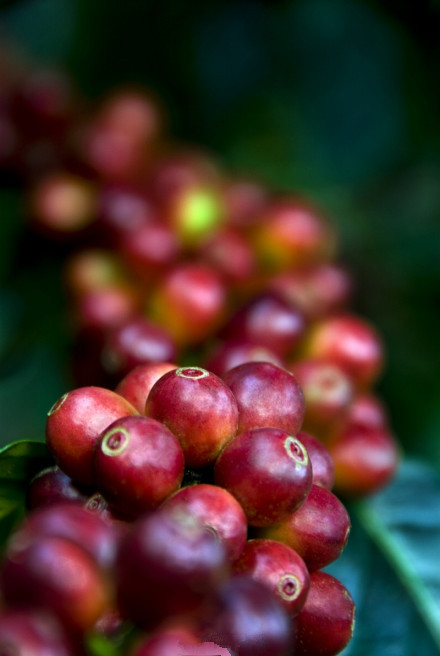
Coffee crisis with tricky tastes and fragile varieties
The price of coffee is forecast to rise by 25% by 2050. The livelihoods of 25 million people may depend on whether scientists can find a way to protect fragile coffee plants and berries. A whole year's coffee harvest may depend on the florescence of just a few days, when plants are particularly vulnerable to extreme weather. Last year, coffee leaf rust caused coffee farms in Nicaragua

The planting technology of coffee the planting environment introduces which country is the most suitable for growing coffee
Field management of loosening soil and weeding: when the seedling height is 3cm to 6cm, the weak or overdense seedlings are pulled out; when the seedling height is 10cm and 13cm, the plant distance is about 30cm. Soil loosening and weeding were carried out at the same time between seedlings and fixed seedlings to keep the soil loose. Coffee beans are more drought-tolerant, and the soil can grow normally when the soil moisture is maintained. During the drought, the coffee beans should be properly watered, but there should be less squatting seedlings during the seedling fixing period.

Introduction of planting methods of coffee trees introduction of planting conditions of various coffee trees which country is the most suitable for planting
Field management of loosening soil and weeding: when the seedling height is 3cm to 6cm, the weak or overdense seedlings are pulled out; when the seedling height is 10cm and 13cm, the plant distance is about 30cm. Soil loosening and weeding were carried out at the same time between seedlings and fixed seedlings to keep the soil loose. Coffee beans are more drought-tolerant, and the soil can grow normally when the soil moisture is maintained. During the drought, the coffee beans should be properly watered, but there should be less squatting seedlings during the seedling fixing period.

What are the grades of Kenyan coffee beans?
Coffee beans in Kenya are graded by particle size, usually divided into AA, AB, C, T, TT, MH, ML and other grades, and the quality is also in descending order. AA+ is the highest grade of Kenyan coffee, and only batches with particularly good flavor and few defects are allowed to do so. In the 1930s, a Tanzanian species was used by the Scott Lab in Kenya.